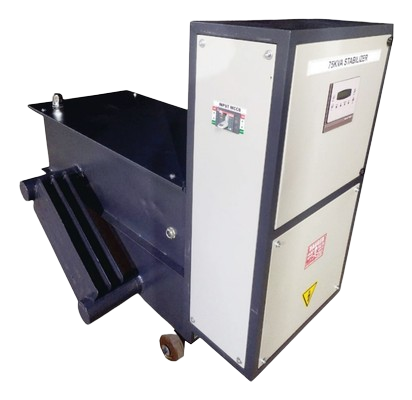
Unstable incoming voltage is one of the most common — and most overlooked — causes of equipment damage and downtime. A servo voltage stabilizer corrects fluctuating input voltage to a steady output automatically, protecting everything downstream. Here are five signs it's time to consider one.
1. Lights Flicker or Dim When Heavy Loads Start
If lighting visibly dims or flickers whenever a large motor, compressor or welding machine starts up, the supply voltage is sagging under load — a classic sign of an unstable or under-capacity incoming supply.
2. Equipment Resets or Trips for No Clear Reason
PLCs, drives and control panels are sensitive to voltage swings outside their tolerance band. Nuisance resets and trips with no obvious cause often trace back to voltage excursions too brief to notice but long enough to upset sensitive electronics.
3. Motors Run Hot or Burn Out Prematurely
Motors are designed to run within a narrow voltage window. Sustained under-voltage forces a motor to draw more current to deliver the same power, causing it to run hotter and age faster; sustained over-voltage increases core losses. Both shorten motor life.
4. Voltage Varies Noticeably Between Day and Night, or by Season
Grid voltage in many industrial areas swings meaningfully with overall demand — often lower during peak daytime hours and higher late at night. If equipment behaves differently at different times of day, seasonal or time-of-day voltage variation is a likely cause.
5. You're Running Imported or Voltage-Sensitive Equipment
Equipment designed for a narrower voltage tolerance than the local grid provides — common with imported machinery — is especially vulnerable to normal local voltage variation that domestic equipment tolerates without issue.
Conclusion
Any one of these signs on its own can have other causes, but two or more together are a strong indicator that voltage instability, not the equipment itself, is the underlying problem. A correctly sized servo voltage stabilizer corrects the supply before it reaches sensitive equipment, rather than requiring every downstream device to tolerate it.
Not sure if a stabilizer will solve your issue?
Our engineers can review your supply readings and recommend the right fix.