
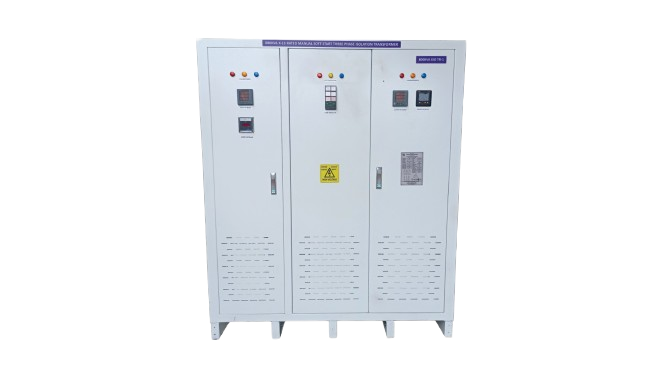
Variable frequency drives, UPS systems, LED lighting and switch-mode power supplies all draw current in sharp, non-sinusoidal pulses rather than a smooth sine wave. That harmonic-rich current heats a standard transformer far more than its rated load current would suggest — which is exactly the problem a K-rated transformer is built to solve.
What the K-Factor Measures
The K-factor is a weighted measure of how much extra heating the harmonic content of a load current causes in a transformer's windings, relative to a purely sinusoidal load of the same RMS current. A standard transformer is effectively K-1. Loads with significant harmonic content call for K-4, K-13 or K-20 rated transformers, calculated from the harmonic spectrum of the connected load.
The extra heating comes mainly from eddy currents in the windings, which rise sharply with the frequency of each harmonic component — the 5th, 7th and higher harmonics do disproportionately more damage than the fundamental current alone.
Typical Applications
- Variable frequency drives (VFDs) for motors and pumps
- UPS systems and their rectifier front-ends
- Data centres and server rooms with large populations of switch-mode power supplies
- LED and electronic-ballast lighting installations
- Facilities with a high proportion of electronic, non-linear loads on a single distribution board
How K-Rated Transformers Are Built Differently
K-rated units typically use heavier gauge or transposed conductors to reduce eddy-current losses, an enlarged neutral conductor to handle triplen (3rd, 9th, 15th) harmonic currents that add up rather than cancel in the neutral, and a core and winding design derated for the extra heat. Getting the K-rating right requires knowing the actual harmonic profile of the load, not just its nameplate kVA.
Conclusion
If a facility is seeing transformers running unusually hot, tripping thermal protection, or failing sooner than expected, and the load includes drives, UPS systems or heavy electronics, a mismatched K-rating is one of the first things worth checking.
Not sure what K-rating your load needs?
Our engineers can review your load profile and recommend the right transformer.